

DJI has owned the pocket gimbal camera market for years. The Osmo Pocket series has been the default recommendation for vloggers and travel shooters who want stabilized footage without hauling a full camera rig. Nobody else has seriously challenged that.
Insta360 is about to try. The company’s CEO, Liu Jingkang, confirmed the Insta360 Luna at the company’s annual meeting in February 2026, with a launch window in the first half of this year. But the interesting part isn’t that Insta360 is entering the pocket gimbal space, it’s how they’re entering it.
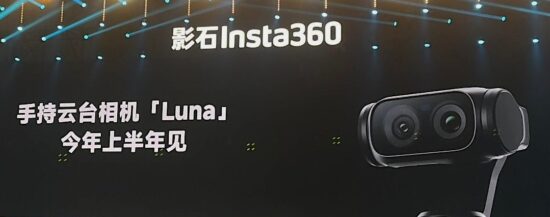
Table of Contents
The Dual-Lens Difference
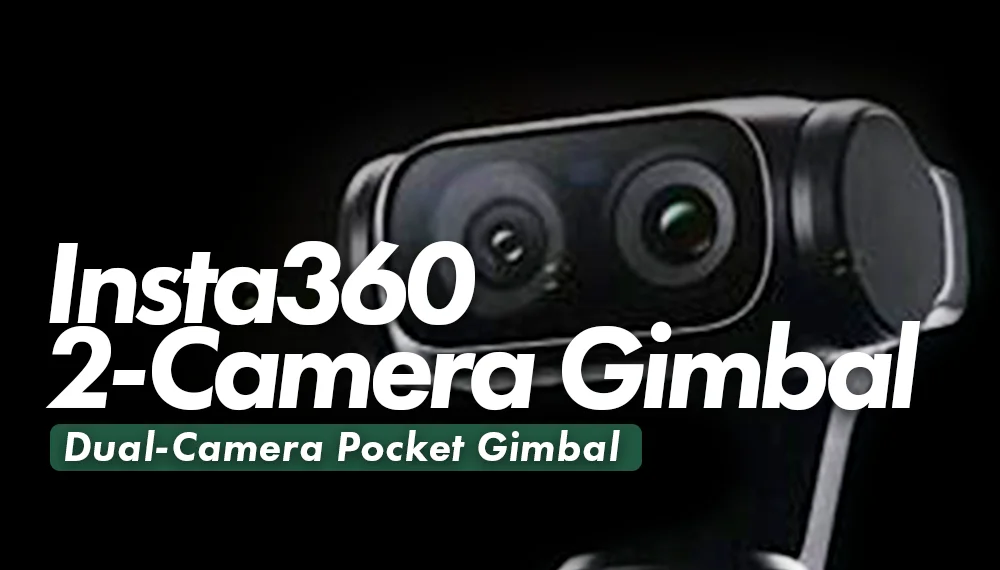
Every pocket gimbal camera so far has used a single lens (maybe potentially the rumored upcoming DJI Pocket 4?). Wide angle, fixed focal length, take it or leave it. The Luna does things differently, with two lenses: a wide-angle primary lens and a dedicated telephoto lens at roughly 70mm equivalent, giving you a 3x optical zoom.
That’s a meaningful distinction.
If you’ve ever tried to shoot a conversation or a product close-up with a DJI Pocket, you know the wide-angle distortion can be unflattering. A telephoto option means natural-looking portraits, better subject separation, and real background blur, without relying entirely on computational tricks.
Leaked footage suggests the dual-camera system, paired with AI processing, can produce depth-of-field effects that punch above what you’d expect from a sensor this size. Nice!
What We Know So Far
The specs are still partly rumored, but here’s what’s been confirmed or credibly leaked:
- Video: 4K at up to 240fps, 10-bit color depth
- Stabilization: 3-axis mechanical gimbal with AI-assisted tracking
- Design: Modular “Twist” system — the camera unit detaches from the gimbal for standalone use
- Display: Rotating touchscreen for flexible shooting angles
- Battery: ~1,500mAh, estimated 150-180 minutes of runtime
- Processing: Dual SoC with dedicated pre-ISP for AI low-light enhancement
- Extras: Optional ND filters, multiple color options
- Price: Expected $499-$699
The Tension: Ambition vs. Execution
On paper, the Luna looks like exactly what the pocket gimbal market needed, competition with a genuine differentiator. But there are real questions.
Dual lenses in this form factor are unproven. Smartphones have normalized multi-lens systems, but a pocket gimbal has to balance weight, heat, and mechanical stabilization across a much smaller body. Adding a second lens and the processing to support it is an engineering challenge that DJI hasn’t attempted … and DJI isn’t known for leaving easy wins on the table.
The price range is wide. At $499, the Luna would be an aggressive competitor. At $699, it starts bumping against mirrorless cameras and high-end action cams. Where it actually lands matters enormously.
4K at 240fps is a bold claim for a pocket device. Thermal management will be the real test. Sustained recording at those specs in a pocketable body would be genuinely impressive if Insta360 pulls it off.
Who Should Care
If you’re a vlogger or travel content creator who’s been locked into DJI’s ecosystem by default, the Luna is the first real alternative worth watching. The dual-lens system addresses one of the pocket gimbal’s fundamental limitations, and you’re no longer stuck with one focal length for every situation. This is great news.
If you shoot products, food, or anything where you want some background separation without switching to a bigger camera, the telephoto lens could be a genuine workflow improvement.
And if you’re already in the Insta360 ecosystem using their action cams, wireless mics, or 360 cameras, the Luna should integrate well.
The Bottom Line
Insta360 is entering the pocket gimbal market with the one feature nobody else has tried. Whether the dual-lens system works as well in practice as it does in concept will determine if the Luna is a real DJI Pocket killer or just an interesting experiment.
We’ll know more when it ships in the first half of 2026. Until then, it’s the most interesting thing happening in the pocket camera space.
Sources:
